
CITY GOVERNMENT OF TABACO
Llorente St., Quinale-Cabasan, Tabaco City, Albay
History
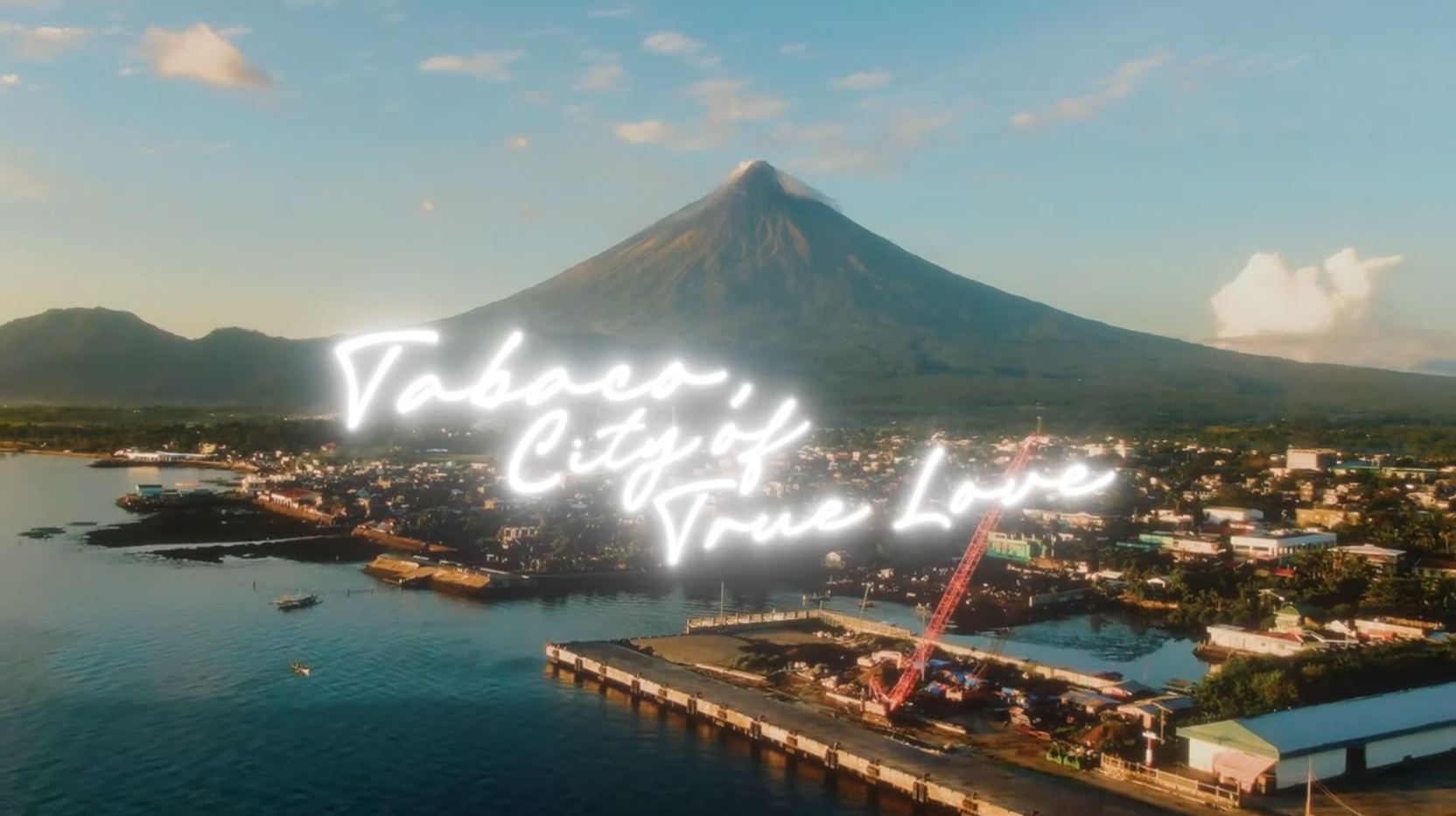
The recorded history of Tabaco began in 1587 when Franciscan missionaries began converting the inhabitants of the town of Cagsawa to Catholicism. In 1616, the Rev. Fr. Pedro de Alcareso, became the first permanent minister of Tabaco. He built a stone church dedicated to Christ’s forerunner St. John the Baptist who since then became the patron saint of Tabaco. Over the years, Tabaco became the largest and the most strategic settlement and in mid-17th century, the province of Albay was divided into two. The first was Partido de Tabaco which included the present-day towns of the First District of Albay, Legazpi, Daraga and Catanduanes. The other division, which was Partido de Iraya, included the towns currently making up the Third District and parts of Camarines Sur. Known even then for being a town of great charm and character, Tabaco was in fact no stranger to natural calamities. In 1811, a powerful typhoon wreaked unimaginable destruction on Tabaco. Because the storm all but stripped the town bare, it earned the nickname Bagiong Oguis (white typhoon). Three years later, in 1814, tragedy struck anew. Mayon Volcano erupted violently and rivers of molten lava rampaged down its slopes even as showers of white hot ash and burning boulders destroyed villages and completely buried Tabaco’s neighbor Cagsawa. The eruption claimed an unprecedented number of lives and took away much of the people’s livelihoods since rice fields were rendered completely unproductive for many years thereafter. Tabaco was spared much of Mayon’s wrath but it took a full decade for it to recover from the damage. The Americans arrived in Tabaco on February 9, 19 00 under the command of Col. Walter Howe. Despite the well-documented courage and patriotism of Tabaquenos, the superior armaments and well-trained soldiers of the American army hastened its conquest of Tabaco and adjoining towns. With the restoration of peace after World War II, the residents of Tabaco started rebuilding their lives and their land. By the time the Philippines gained independence, Tabaco was once again a thriving town.
OSIPON: The Folk Stories of Tabaco
A question, a beautiful maiden and a jealous father, according to one of the more popular legends, gave the city its name. The story goes that Spanish conquistadores, with their “Que lugar este? (What place is this?)” inquisition and thoughtless ignorance of other cultures, happened to stand dangerously close to a young woman who was the daughter of an overprotective father. The predicament was made even worse by the visitors’ and the locals’ incapability of understanding one another. So when the enraged father kept shouting “Tabak ko! Tabak ko! (My Bolo! My Bolo!)”, the clueless Spaniards mistook this excitement as jubilation at their arrival and took the words as the answer to their question. Thus, the frenzied screams of “Tabak ko!” of a father who only wanted to protect his daughter from harm, became the name of our city. Another related tale, more romantic but less humorous, describes pre-Hispanic Tabaco, a self-sufficient, peaceful and prosperous town with the ancient name of Pagkamoot (Love) under the able leadership of the warrior Datu Maisog (Brave) who had an exceptional daughter, the Princess Nayoka or Magayon (Beautiful). Although the staple formula of miscommunication between the locals and foreigners and the expected clash of cultures is present, this version supposedly happened during the wedding feast of Princess Nayoka-Magayon to a distant cousin named Makusog (Strong). While everyone was preparing for the wedding, armed visitors of a strange race beached the shores of what is now Natunawan, and the natives, anticipating trouble, cried out “Tabak ko! Tabak ko!”. And like in the first version, the foreigners recorded this as the name of the place. Funny or heroic, truth or mere myth, these different stories relate to us only one thing, Pagkamoot or Tabaco, as described by Congressman Edcel C. Lagman, is truly the home of a proud and gallant race. Although there is now nothing remotely warlike about Tabaco whose people are peace-loving, gentle and warm, the name never lost its ancient connotation. Just as the bolo, which is the premier product of a city renowned for its blacksmiths, is a balance of beauty, represented by the craftsmanship of its sheath and polo or handle and brutality, symbolized by the lukas or blade, Tabaquenos, are also of a dual nature. Their passionate nature and fiery disposition hide just beneath their calm and laid-back exterior and this altogether makes for a remarkable and unusual combination.
Mission
It is our mission to ensure the promotion and development of healthy and progressive TABAQUEÑOS through wise utilization of, and equitable access to resources and opportunities, human resource development, shared in local governance, efficient and effective delivery of basic services and sustainable economic growth.
Vision
We envision Tabaco City as a center of excellence in education, trade and tourism in the Bicol Region with God-centered, healthy, and empowered people living in a world-class, well-designed, balanced and disaster-resilient environment, with a progressive and globally competitive economy led by gender sensitive and competent leaders committed to good governance and sustainable development.
Frequently Asked Questions
The City Government of Tabaco (LGU Tabaco) is responsible for providing public services, implementing local policies, promoting community development, and ensuring good governance for all residents.
LGU Tabaco is organized into various departments, offices, and service units, each handling specific areas such as health, education, public safety, infrastructure, and local legislation.
Residents can access city services through LGU Tabaco’s offices, official website, or designated service centers. Many services, including permits, clearances, and public assistance programs, can be requested online or in person.
Citizens can participate through public consultations, town hall meetings, feedback forms, and citizen advisory committees. Residents are encouraged to provide input on policies, programs, and community projects.
All ordinances, resolutions, and official policies are available through LGU Tabaco’s official website or at the City Hall records office. Some may also be downloadable in PDF format for easy reference.
You can contact LGU Tabaco through:
City Hall Address: Tabaco City Hall, Brgy. Quinale Cabasan (Pob.)
- Email Address: citymayorsofficetabaco@gmail.com
Yes! LGU Tabaco regularly organizes programs for community involvement, disaster preparedness, environmental initiatives, and local development projects. Residents can volunteer or participate through announcements on the official website or social media channels.
LGU Tabaco publishes official reports, budgets, and project updates regularly. Citizens can review these documents online or request them from relevant offices to ensure transparency in governance.
Recent Posts
- NOTICE OF AWARD (NOA)- TO MENBILL TRADING General Merchandise, Supply & Delivery of Various Janitorial Supplies, 1, Lot (PhilGEPS Ref. No. 6240198, PR 1107) September 10, 2026
- REQUEST FOR QUOTATION (RFQ)- The City Government of Tabaco through its Bids and Awards Committee (BAC), intends to procure “Supply & Delivery of Motorcycle of Architect’s Office and HSDO” with an Approved Budget for the Contract (ABC) amounting to Six Hundred Thousand Pesos (Php 600,000.00) through Section 34 Small Value Procurement of the Implementing Rules and Regulations of RA No. 12009. (PhilGEPS Ref. No. 13234472, PR 1440-1441) September 9, 2026
- REQUEST FOR QUOTATION (RFQ)- The City Government of Tabaco through its Bids and Awards Committee (BAC), intends to procure “JO – Labor & Materials for the Repair and Maintenance of HYUNDAI Backhoe R140W-9S (Wheel Type) of GSO” with an Approved Budget for the Contract (ABC) amounting to Eight Hundred Fifty-Two Thousand, One Hundred Fifty-Nine Pesos and Eighty-Two Centavos (Php 852,159.82) through Section 34 Small Value Procurement of the Implementing Rules and Regulations of RA No. 12009. (PhilGEPS Ref. No. 13234461, PR 1427) September 9, 2026
City Seal
Key Symbols and Meanings
Every element of the official Seal of Tabaco City represents the city's identity, heritage, industries, natural resources, and the values that continue to shape its people and community.
01
Mayon Volcano
The iconic Mayon Volcano represents the city's breathtaking natural landscape and serves as one of its most recognizable landmarks.
Represents
Natural beauty, strength, resilience, and the enduring spirit of the people of Tabaco City.
02
Abaca Industry
Abaca reflects Tabaco City's long-standing reputation as one of the country's important producers of high-quality abaca fiber.
Represents
Livelihood, craftsmanship, agricultural excellence, and economic prosperity.
03
Ocean & Coastal Elements
The surrounding sea highlights the city's coastal location and its close relationship with marine resources.
Represents
Fishing, maritime trade, tourism, and harmony with nature.
04
Metalcraft & Industry
Traditional tools and industrial symbols recognize Tabaco City's well-known craftsmanship in producing knives, bolos, and other metal products.
Represents
Skill, innovation, entrepreneurship, and local industry.
05
Official Circular Seal
The outer ring bearing the words "City of Tabaco" and "Philippines" identifies the city's official seal and authority.
Represents
Unity, local governance, public service, and the official identity of Tabaco City.
06
Progress and Development
The seal reflects Tabaco City's commitment to sustainable growth, quality public service, and the continuous development of its communities.
Represents
Progress, good governance, innovation, and a brighter future for every Tabaqueño.